If you are hiring a mobile slew crane, the first question is always the same: what size do I actually need? Get it wrong in one direction and you have paid for capacity you never used. Get it wrong in the other and the crane arrives and cannot make the lift.
The short answer is that size is not decided by the weight of the load. It is decided by weight plus radius plus height plus boom configuration plus ground conditions. This guide explains how these cranes work and how crews size them.
What is a mobile slew crane?
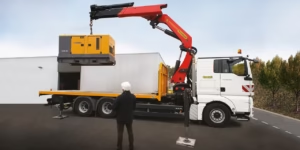
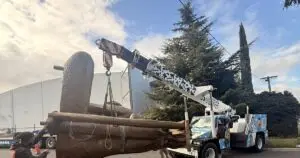
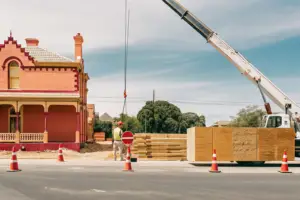
A mobile slew crane is a crane mounted on a mobile chassis — truck, trailer or purpose-built carrier — that can lift a load and slew it, meaning rotate the boom and the load to a new position without moving the whole machine. Most use hydraulic power and a telescoping boom to reach height and distance. The slew is the difference that matters. A pick and carry crane such as a Franna drives the load to where it is needed. A slew crane sets up once, on outriggers, and rotates to place loads around it. That makes it the right tool for confined single-position lifts, construction staging, steel erection, rooftop plant and equipment installs.How does a mobile slew crane work?
Outriggers stabilise the crane. Before anything is lifted, outriggers extend to spread the machine’s weight and resist tipping. How much the crane can lift depends heavily on whether those outriggers are fully deployed, and on whether the ground can carry the point loads — soft ground needs matting. The boom sets height and reach. Boom length and angle determine how high the crane can lift and how far out it can work. Shorter boom, less reach and height but more capacity. Longer boom, more reach and height but less capacity. The hoist controls the load. Wire rope and drum systems raise and lower the hook, with load monitoring fitted to most machines. Slewing repositions the load. The crane lifts, rotates, and sets the load accurately without repositioning the machine. The load chart sets the limits. Every mobile slew crane operates to a manufacturer’s load chart specific to that model, keyed to boom length, boom angle, radius and outrigger configuration, with wind and attachment selection factored in. The chart is not advisory. Capacity is only valid for the exact configuration it describes.The five things that decide crane size
1. Load weight — including rigging. Start with the heaviest single item you plan to lift, then add the lifting gear: slings, shackles, spreader bars, lifting beams. Rigging weight is the most commonly forgotten number in crane sizing, and on a marginal lift it is the number that pushes the job outside the chart. 2. Load radius — how far it has to reach. Radius is measured from the crane’s centre of rotation to the centre of the load. A small radius usually means good capacity. A large radius reduces it sharply. This is why a modest load at long reach can need a much bigger crane than people expect — reach, not weight, is what most often forces the size up. 3. Lift height. Height to the hook, height to the set point if it differs, and any clearance you need over an obstruction. The higher the lift at a given radius, the more capacity falls away. 4. Boom configuration and outreach. If the job needs a longer boom or a fly jib, capacity at outreach reduces, and some configurations only exist on certain crane classes. 5. Site conditions. Room for full outrigger deployment, ground bearing capacity, matting requirements, access width and height for the machine to get in at all. The crane’s rated capacity is only real if the site allows the set-up the chart assumes.How the sizing usually falls out
Every job has to be calculated against the actual load chart, but the patterns are consistent:- Small lifts in tight spaces — light equipment, small structural members. Usually a smaller or mid-range slew crane, where the constraint is access rather than capacity.
- Installs with moderate reach — rooftop air-conditioning units, light steel. Sized for radius and height together, not weight alone. This is the category most often under-specified.
- Heavy picks at long reach — steel erection, large mechanical plant. Needs a larger machine with enough boom length to hold capacity out at radius.
The fast method
Work through these six and you have effectively sized the job:- What is the heaviest item, including rigging?
- How high does it need to go, to the hook and to the set point?
- How far is the pick from where the crane can stand?
- Is there room for outriggers to fully deploy?
- How much slew is needed to get the load into position?
- What is the timeline, and how fast does set-up need to be?
Why getting the size right matters
An undersized crane is not a small problem. It means a return visit, a second mobilisation charge, and a crew standing idle in the meantime. An oversized crane means paying for capacity and set-up time the job never needed. Sizing it correctly avoids delays from inadequate capacity, reduces rework and risk, keeps the programme intact, and gives you the safest configuration for the site you actually have. Even experienced crews strike trouble when a crane is undersized or set up on ground that will not carry it.Want a recommendation?
Send through the load weight and what it includes, the lift height, the radius from crane to pick, and your site access constraints — tight lanes, ground type, overheads. Photos if you have them. We will tell you what class of crane fits and what to verify on the load chart. More detail: Mobile Crane Hire · How Much Does Crane Hire Cost in Melbourne? · What Is a Lift Plan and When Do You Need One?Not sure what size crane you need?
Combination Cranes & Transport gives fixed, no-surprise quotes — and we handle permits and traffic management when the job needs them. Call 0419 150 698 or request a free site inspection and quote online.Need to hire a mobile crane?
Combination cranes & Transport can provide you a quote to get your project done on time, and budget - and we handle permits and traffic management when the job needs them